
Bookkeeping Firm: AI Tax Form Data Extractor for Automated Client Data Entry
Data extraction system built for a bookkeeping firm, automatically pulling structured data from US tax forms.
The Challenge
Our client runs a bookkeeping firm serving US based clients, which means every tax season the team drowns in paperwork. W-2s, 1099s, 1040s, receipts, deduction schedules. Every form has to be read, the relevant fields identified and the data entered into the firm's accounting software one line at a time.
The problem is not just the time. Manual data entry at volume introduces errors. A transposed digit in an income figure or a missed decimal in a deduction can cascade into filing problems that take hours to trace and fix. And the more clients the firm takes on, the worse the bottleneck gets. Adding clients means adding data entry hours, which means adding staff, which means the firm's growth is capped by how fast it can hire and train.
The team was spending a significant portion of every workday moving numbers from paper and PDF forms into spreadsheets and accounting systems. That is time that should be spent on the actual bookkeeping work, the analysis and the client conversations that justify the firm's fees.
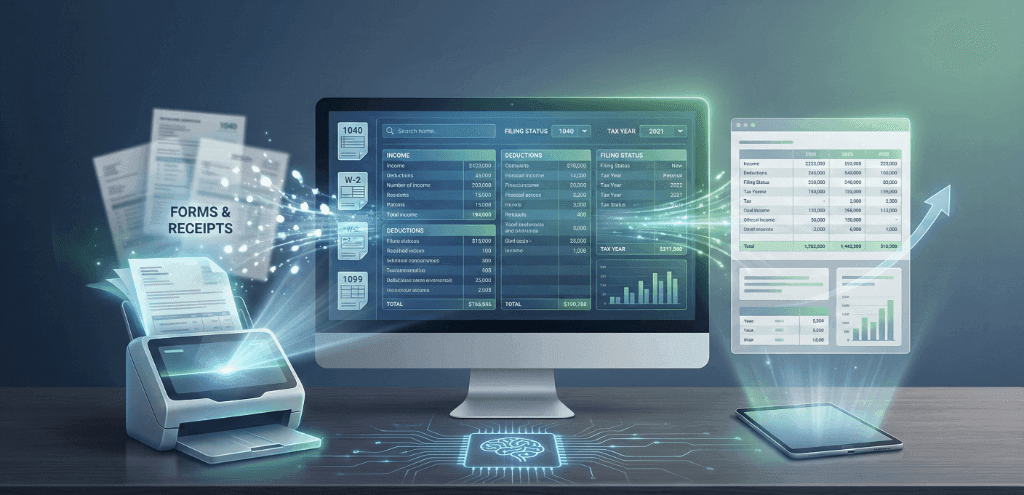
**Our Approach ** We built the Tax Form Data Extractor to take a form in, whether uploaded as a PDF, scanned from paper or submitted digitally by a client, and pull the structured data out automatically.
The system was trained to recognize the standard US tax form templates and the specific fields that matter for bookkeeping: income figures, withholding amounts, deduction categories, filing status, tax year and payer information. Rather than treating each form as a fresh problem, the extractor knows what a W-2 looks like, what a 1099 looks like and where the relevant numbers sit on each.
Extracted data gets output in a clean, structured format ready to be pushed into the firm's accounting software or a review interface where a bookkeeper can verify before the numbers flow into client files. That human review step matters. Fully autonomous data entry sounds impressive in marketing copy but for tax data, a review layer catches the edge cases and protects the firm from the one wrong number that becomes a problem downstream.
For unusual forms or handwritten additions the system cannot read confidently, it flags them for manual review rather than guessing. This is the piece most extraction tools skip and it is what separates a system a bookkeeping firm can actually trust from one they have to double check every entry on anyway.
The Results
The system took the firm's tax form processing from a manual line by line data entry task to a review and verify workflow. What used to require reading the form and typing the numbers now requires scanning the extracted output and confirming it matches. That change compounds across every client and every form the firm handles.
Error rates dropped because the system does not fatigue the way a human doing repetitive data entry does at hour six of a workday. Processing capacity increased because the bottleneck is no longer typing speed. And the team's time shifted from mechanical data entry to the higher value work that actually requires bookkeeping expertise. ** Why It Worked**
Two things. First, the system was built around US tax form templates specifically rather than as a generic document parser, which meant accuracy on the forms that actually matter to the firm was high from day one. Second, keeping a human review layer meant the firm never had to trust the AI blindly, which is what makes automation systems either get adopted or get abandoned in professional services. Bookkeepers do not need software that promises to replace them. They need software that removes the boring part of their job so they can focus on the work that pays.