
Kevton Technologies: Ecommerce Website for Computer Retailer and Repair Shop
A full ecommerce website built for Kevton Technologies featuring a product catalog, custom PC build requests, book repair services, offers and a blog on a fully responsive design.
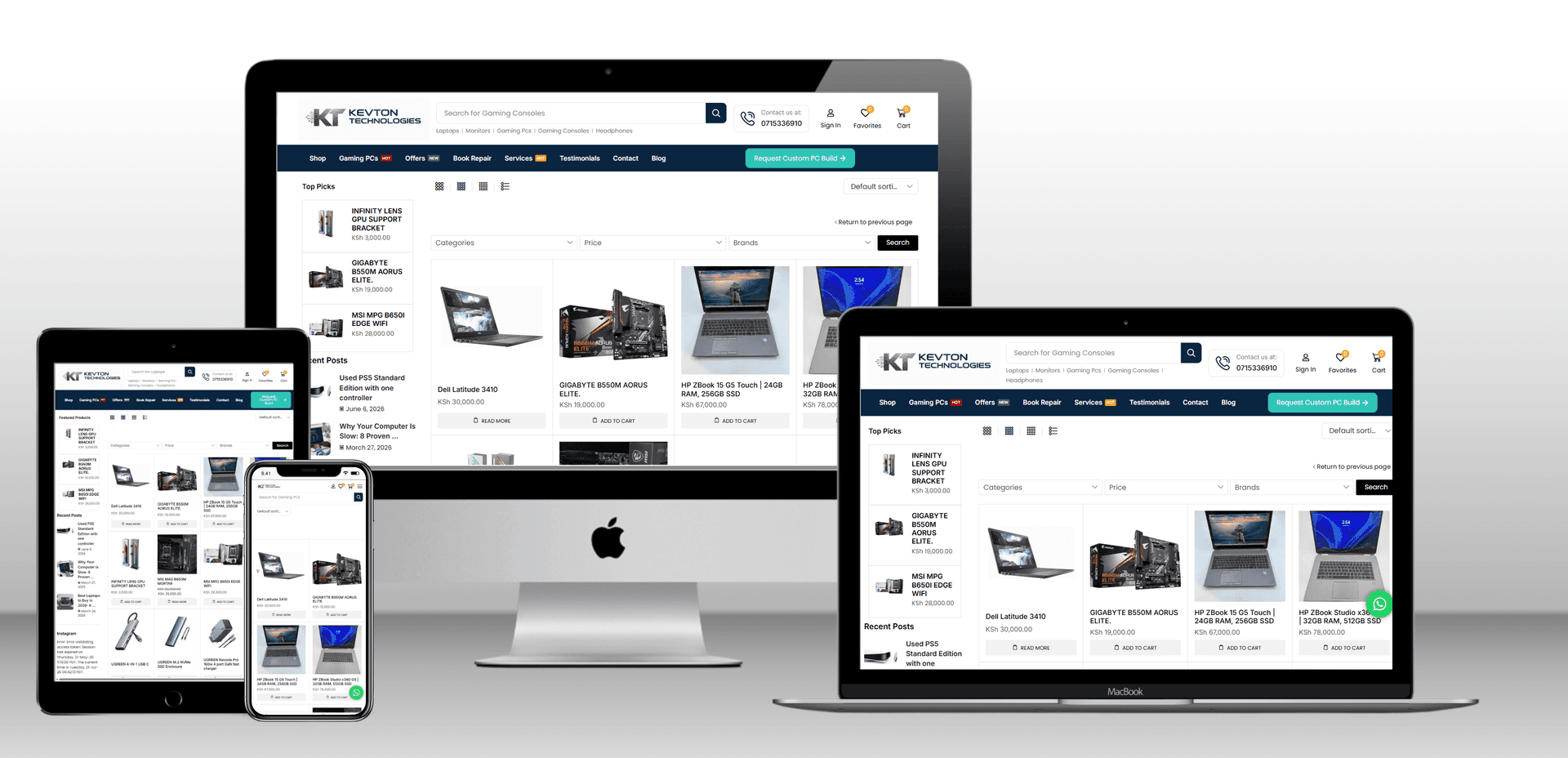
**The Challenge ** Kevton Technologies operates in a category where buyers do serious research before they commit. A customer shopping for a laptop or a gaming PC wants to compare specifications, see clear pricing, check availability, read reviews and often ask questions before ordering. A basic online store front is not enough. The site had to work as a real product research tool as well as a checkout, or the buyer would leave and complete the purchase somewhere with better information.
Beyond product sales, the business needed the site to handle two adjacent revenue streams: custom PC build requests, where customers specify components and the shop assembles the machine, and computer repair bookings, where customers bring in devices for service. Both of those flows have different user needs from a standard ecommerce checkout, and cramming them into a generic template would have hurt conversions on all three.
The site also had to work across every device customers might use to reach it. Buyers browse heavily on mobile but often complete larger purchases like laptops on desktop, so both experiences had to be strong. A responsive template that "works" on mobile but is frustrating to actually shop on would have cost the business real orders.
**Our Approach ** We built the site to give the Kevton team full control over their day to day content, products and pricing without depending on a developer for every update. That decision shapes how the store scales over time. A site the team cannot manage themselves becomes a bottleneck. A site they can run becomes a growing sales channel.
Product architecture was structured around the categories that matter for a computer retailer: laptops, monitors, gaming PCs, gaming consoles, headphones and components. Each category was set up with filtering by price, brand and specification so buyers could narrow down to the products that fit their needs without scrolling through a wall of options.
For the custom PC build flow we built a dedicated request path where customers describe what they want (use case, budget, preferred components) and the shop responds with a quote and build timeline. This kept custom builds from getting confused with off the shelf product orders, which would have created checkout problems and customer service headaches for both sides.
For repair services we built a book repair flow so customers could describe their device and the issue before bringing it in, giving the shop advance notice of what was coming through the door and letting the customer know the diagnostic fee upfront.
The site was designed mobile first because that is where most retail traffic starts, but with a desktop experience strong enough to hold buyers through a longer research and checkout cycle. Navigation, search, cart, favorites and account features all work consistently across screen sizes.
Blog content was integrated for SEO and customer education. Guides on which laptop to buy, common repair issues and PC build advice give the site organic search value beyond direct product searches, and give the Kevton team a place to answer the questions customers ask before they buy.
**The Results ** The launched site gives Kevton Technologies a complete online presence covering product sales, custom builds, repairs and content marketing in one system. The team can add products, publish offers, write blog posts and manage orders independently, which is the piece that determines whether an ecommerce site becomes a growing sales channel or a static brochure that goes stale.
The multi service structure (retail plus custom PC builds plus repairs) lets the business capture revenue from customers at different points in their journey. Someone who is not ready to buy a full laptop today can still book a repair or request a custom build, which keeps them engaged with the brand instead of bouncing to a competitor.
**Why It Worked ** Three things drove the build. Giving the team full day to day control over the site meant they could actually run it without depending on developers for every product update or price change. Structuring the site around three revenue streams rather than forcing everything through a single ecommerce checkout meant custom builds and repairs became visible services rather than buried footnotes. And building mobile first with a desktop experience that held up for longer research sessions matched how tech buyers actually shop.